Risks of Buying Property in Phuket: What Every Investor Must Know
The real risks of buying property in Phuket — developer default, title issues, legal ownership limits, and currency exposure — explained honestly with mitigation strategies.
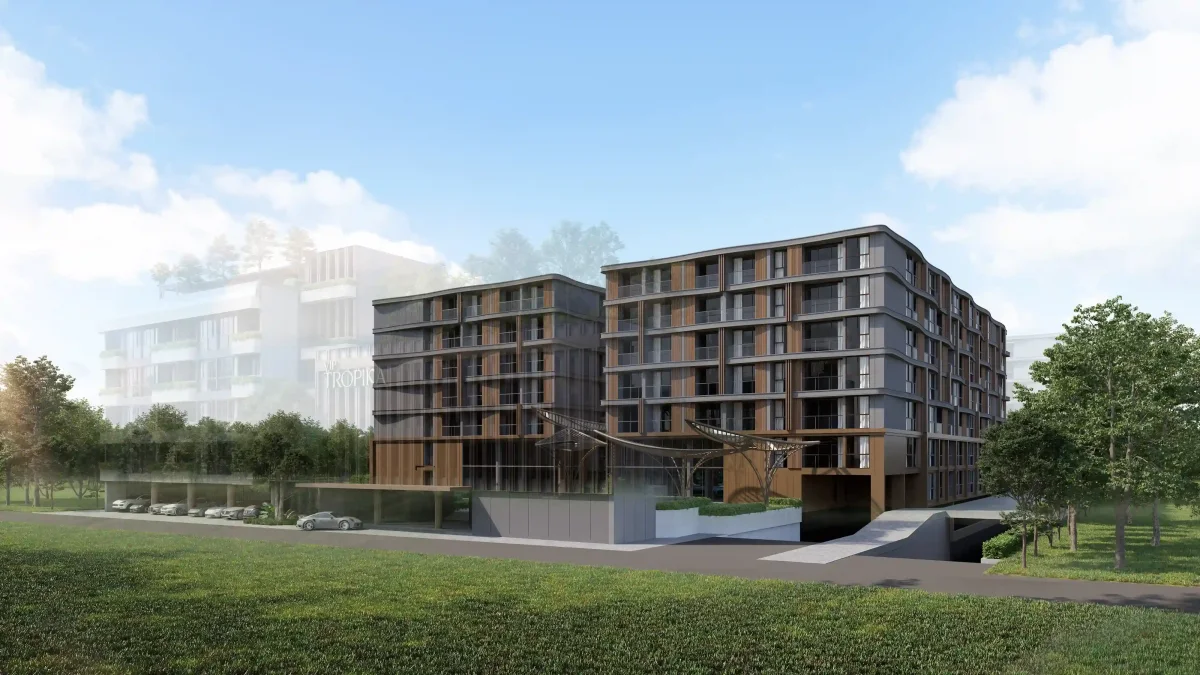
Risks of Buying Property in Phuket
The main risks of buying property in Phuket are developer default on off-plan projects, title deed problems on land, foreign ownership restrictions being circumvented with unsafe structures, poor property management undermining rental returns, and currency fluctuation. Each risk is manageable with the right due diligence — but ignoring any one of them can be costly.
Want personalized property advice?
Our experts answer in 2 hours. 0% buyer commission.



Phuket Property Risk Matrix
| Risk | Likelihood | Impact | Mitigation Difficulty |
|---|---|---|---|
| Off-plan developer default | Medium | High | Moderate (developer vetting) |
| Title deed defects (land) | Low-Medium | Very High | Moderate (legal due diligence) |
| Unsafe ownership structure | Low (if advised correctly) | Very High | Low (use qualified lawyer) |
| Management underperformance | Medium-High | Medium | Low (choose carefully) |
| Currency devaluation | Medium | Medium | Low (diversification) |
| Oversupply in micro-market | Medium | Medium | Low (location research) |
| Regulatory change | Low | Medium-High | Low (market monitoring) |
| Renovation/maintenance costs | Medium | Low-Medium | Low (budget correctly) |
Want personalized property advice?
Our experts answer in 2 hours. 0% buyer commission.
Risk 1: Off-Plan Developer Default
This is the highest-consequence risk for Phuket property investors. Buying off-plan means paying for something that hasn’t been built yet — if the developer runs into financial difficulty, projects can stall, be delayed by years, or fail entirely.
What goes wrong: Developer runs out of sales volume to fund construction. Thai construction financing is often project-by-project, meaning one project’s failure doesn’t destroy the developer company, but your unit’s completion is at risk.
Real examples: Multiple Phuket projects have been delayed 12–36 months beyond promised completion dates. A small number have failed entirely, leaving buyers in complex legal battles.
How to mitigate:
- Research the developer’s completed projects. Have they delivered before, on time, to spec?
- Check for Escrow or bank-backed construction financing (increasingly common with reputable developers)
- Review your contract for completion guarantees, penalty clauses, and refund provisions
- Engage an independent Thai lawyer to review the contract before signing
- Avoid developers offering unrealistic guarantees (12%+ guaranteed rental yields often signal financial instability)
Risk 2: Title Deed Defects
Thailand has multiple land title documents, and they are not equal. Buying property on the wrong title type can mean your “ownership” is legally weak or even void.
Title hierarchy in Thailand:
| Title Type | Security | Usability |
|---|---|---|
| Chanote (NS-4) | Highest | Full freehold ownership — the only title worth buying |
| Nor Sor 3 Gor | Good | Upgradeable to Chanote; acceptable with care |
| Nor Sor 3 | Medium | Needs 30-day public notice to transfer |
| Sor Por Gor | Very Low | Cannot be sold — do not buy |
Key risk: Some plots in Phuket were historically registered on forest reserve land or under encroachments. A title that looks legitimate may have a cloud on it that only a full search reveals.
How to mitigate:
- Accept only Chanote (NS-4) title for any significant investment
- Commission a title search at the local Land Office through a qualified Thai lawyer
- Verify that all boundary markers are correct and no encroachments exist
- For condos: verify the building holds a valid Condominium Act license (the title deed for condo units, called a “pink card,” is issued from this)
Risk 3: Illegal or Unsafe Ownership Structures
Foreign nationals cannot own land freehold in Thailand. Some developers and agents have historically offered workarounds using Thai nominee shareholders — Thai nationals who nominally hold shares in a company that owns land, with the foreign buyer as the real economic owner. This practice is illegal under Thai law and the Land Code.
The danger: If discovered, the structure can be challenged and ownership transferred to the Thai state. The Land Department actively investigates suspicious company ownership structures.
Legal alternatives:
- Condo freehold: Legally safe, directly in your name
- Long-term leasehold (30 years, renewable): Widely used, legal when properly structured, protects use rights even if not ownership
- Thai company with genuine Thai partners: Legal if shareholders are genuine and the company has real business activities
How to mitigate: Use a qualified, independent Thai property lawyer (not the developer’s lawyer). The legal fee for proper advice ($500–$1,500) is trivial compared to the risk.
Risk 4: Property Management Underperformance
Your rental yield doesn’t come from the location alone — it comes from execution. A poorly managed property in a great location can produce 60% of its potential income. Common failures:
- Slow response to maintenance issues causing bad reviews and booking collapse
- Poor platform presence (only listed on 1–2 platforms instead of 15+)
- Static pricing instead of dynamic yield management
- High vacancy between bookings due to poor calendar management
- Opaque reporting that makes it difficult to verify actual income
How to mitigate:
- Choose managed programs with a demonstrable track record and transparent monthly reporting
- Ask for actual occupancy data from existing owners in the same building
- Verify the management fee structure: most reputable programs charge 20–25% of gross revenue
- Include performance clauses in your management agreement
Risk 5: Currency Risk
Phuket rental income is denominated in Thai Baht. If you’re a USD, EUR, or GBP investor, your home-currency yield depends on the exchange rate at the time of remittance.
Scenario: A 9% gross yield in THB becomes 7.8% in USD if the Baht weakens 13% against the Dollar over your hold period.
Historically: The THB has been relatively stable against major currencies over 10+ years, with periods of mild appreciation. It is not a high-volatility currency. But it is not immune to emerging market pressure.
How to mitigate:
- Maintain some expenses in THB (e.g., reinvest into Phuket property management reserves)
- Use a multi-currency account to time remittances
- Hold as a long-term investment to average out short-term currency movements
Risk 6: Oversupply in Specific Micro-Markets
Phuket has seen rapid development in some corridors, and in certain micro-markets, supply has outpaced demand. This is most visible in Patong (budget condo segment) and some inland areas far from the beach.
Signs of oversupply in a specific area:
- Multiple projects from different developers completing simultaneously
- Nightly rates flat or declining despite growing tourist numbers
- Long-term rental yields falling as more units compete for the same tenant pool
How to mitigate:
- Research pipeline supply (how many units are completing in the same area in the next 24 months)
- Focus on areas with genuine supply constraints (beachfront, limited land parcels)
- Bang Tao remains underpinned by Laguna infrastructure which caps competing supply
Risk 7: Regulatory Change
Thailand’s property ownership rules for foreigners have been stable for decades, but the legal framework can change. Specific risks:
- Short-term rental regulation (the Hotel Act technically covers Airbnb-style rentals)
- Changes to the 49% foreign quota in condominiums
- Tax changes on rental income or capital gains
Mitigation: No complete protection, but freehold condos are the most legally defensible structure. Staying informed through local legal advisors is essential.
Pros and Cons of Phuket Property Investment Risk Profile
Pros (why the risk is worth it):
- Yields of 7–12% significantly outperform the risk-adjusted return of Western markets at 3–4%
- Legal freehold ownership for condos is genuinely solid and well-established
- Tourism demand is structural and growing
- Professional management eliminates most operational risk
Cons (real risks that remain):
- Off-plan developer risk requires significant due diligence investment
- No independent registry for off-plan escrow (unlike some markets)
- Legal enforcement for failed developers is slow and uncertain
- Currency risk is real for non-THB investors
Frequently Asked Questions
For off-plan purchases, developer default or significant delay is the highest-impact risk. For ready property, the main risk is title deed defects — buying on an inferior or encumbered title. Both are manageable with proper due diligence but neither can be ignored.
Buying a freehold condominium in Phuket is safe and legally clear for foreigners. The Condominium Act provides genuine title deed ownership. The risks arise mainly from off-plan developer selection and, for land/villa purchases, from using legally questionable ownership structures.
You can lose rights to property if an illegal ownership structure (Thai nominee) is discovered and challenged, or if there's a fundamental title defect. For legitimately purchased freehold condos, the risk of losing your property is very low. Leasehold properties carry residual risk if the lease is poorly drafted.
Yes — an independent Thai property lawyer is strongly recommended for any purchase. Costs are typically $500–$2,000 depending on complexity. This covers title searches, contract review, ownership structure advice, and transfer supervision. Never use only the developer's lawyer.
Check their completed projects (visit or view photos/reviews of finished buildings), verify their company registration and Land Department record, look for bank-backed construction financing, ask for references from previous buyers, and check whether they've met completion deadlines before. Established developers with 5+ completed projects are significantly lower risk.
A sustained tourism decline would compress yields and potentially reduce resale values. However, Phuket's tourism is deeply structural — it's Thailand's premier international tourist destination with major airport connectivity, established resort infrastructure, and global brand recognition. A complete and permanent decline is highly unlikely.
Read Also
- Can Foreigners Buy Property in Thailand?
- Freehold vs Leasehold in Thailand
- Hidden Costs of Buying Property in Thailand
- Thailand Property Tax for Foreigners
- Is Phuket Good for Property Investment?
Get a Free Property Consultation
Tell us your budget and goals — our expert will contact you within 2 hours.

MORE Group
Phuket Real Estate Experts
The MORE Group team has helped 500+ European and American buyers purchase property in Thailand. We provide legal support, 0% commission, and on-the-ground expertise since 2018.
Get a Free Property Consultation
Tell us your budget and goals — our expert will contact you within 2 hours.